Equipment Lease vs. Buy Calculator
Should you finance that new tractor or lease it? This calculator shows the true 5-year cost of each option — including depreciation, opportunity cost, and residual value.
— USDA Economic Research Service — Farm Equipment Costs
Equipment Details
Year-by-Year Cumulative Cost Comparison
| Year | Buy (Cumulative) | Lease (Cumulative) | Difference |
|---|
When Buying Makes Sense
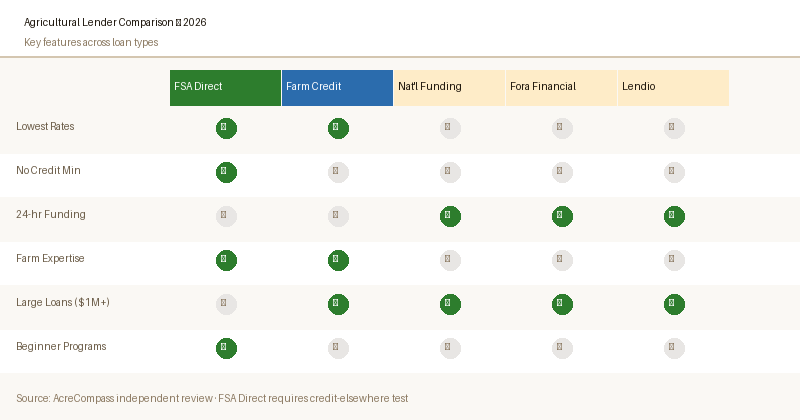
Buying farm equipment generally makes financial sense when you plan to use it for many years, when you want to build equity in depreciable assets, or when you need the Section 179 tax deduction in the year of purchase.
- Long ownership horizon. If you'll use the equipment for 10+ years, buying almost always wins once the loan is paid off and you're operating cost-free.
- Strong credit, low rates. At rates below 7%, buying through AgDirect or Farm Credit is often cheaper than leasing after factoring in residual value.
- Section 179 advantages. Bought equipment can be expensed under Section 179 (up to
$1.16M in 2026). Leased equipment generally cannot. - Customization needs. If you need to modify or accessorize the equipment, you need to own it.
- Building balance sheet equity. Owned equipment improves your net worth and borrowing capacity for future operating loans.
AgDirect for equipment loans
AgDirect specializes in farm equipment financing with rates starting around 5.90% — often lower than general business lenders. Compare their quote against your lease payment.
When Leasing Makes Sense
Equipment leasing offers advantages in specific scenarios — particularly when technology cycles quickly, cash flow is tight, or you want to preserve borrowing capacity for operating loans.
- Technology that updates frequently. Precision agriculture equipment, GPS systems, and modern combines improve significantly every
3–5 years. Leasing lets you upgrade without selling a depreciated asset. - Cash flow preservation. Lease payments are typically lower than loan payments for the same equipment, preserving operating cash flow for seed, fertilizer, and other inputs.
- Short-term need. If you're only farming a specific field for
3–5 years, leasing avoids owning equipment you won't need. - Lower upfront capital. Most leases require little or no down payment vs. 10–20% down on a purchase loan.
- Simplified budgeting. Fixed monthly lease payments make cash flow forecasting easier than variable maintenance + loan payment budgets.
Watch residual value assumptions
The calculator uses your entered residual value %. For actual leases, negotiate this number carefully — a higher residual means lower monthly payments but a larger balloon if you want to buy the equipment at lease end.
Ready to Finance Farm Equipment?
Compare equipment loan rates from specialized ag lenders before you decide. AgDirect and Fora Financial both offer fast decisions on farm equipment financing.